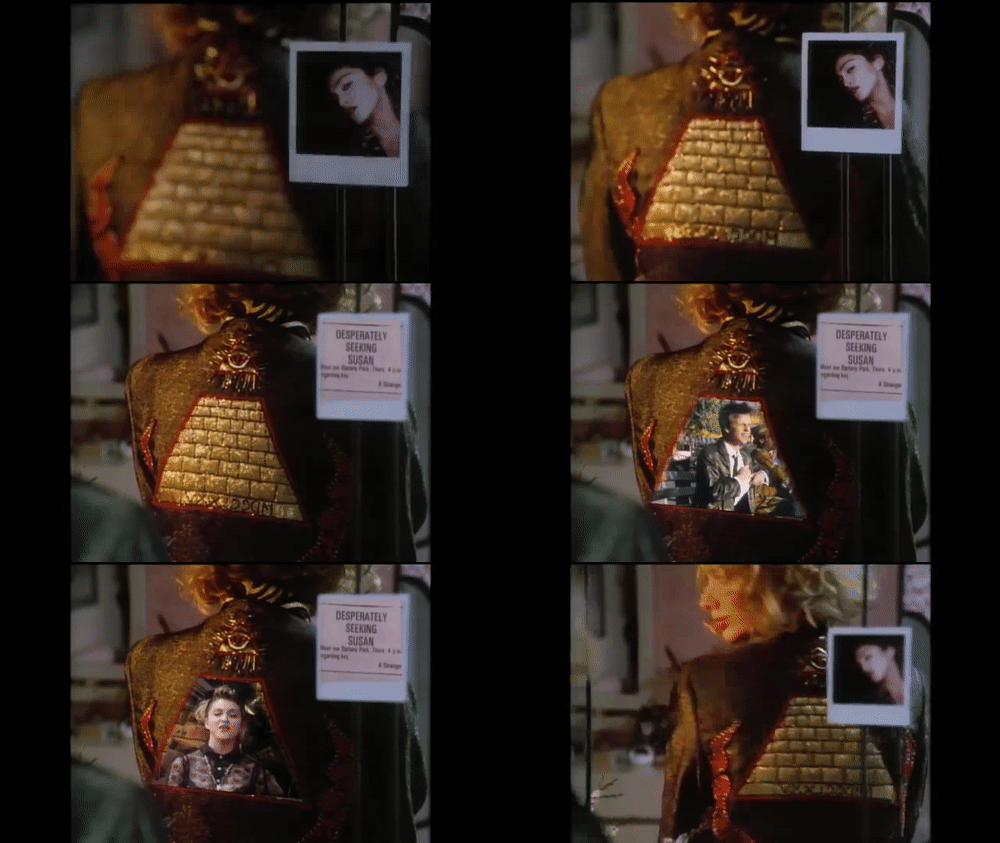
Isaac

Isaac Luria, also known as Isaac ben Solomon Luria Ashkenazi or simply the Ari (an acronym for “Ashkenazi Rabbi Isaac”), was a prominent Jewish mystic and the father of modern Kabbalah. Born in 1534 in Jerusalem and later moving to Safed in the Galilee region of present-day Israel, Luria became one of the most influential figures in Jewish mysticism.

Key Contributions and Teachings of Isaac Luria:

  • Lurianic Kabbalah: Isaac Luria is best known for developing a new interpretation of Kabbalah, known as Lurianic Kabbalah. His teachings were largely transmitted through his disciples, particularly Rabbi Chaim Vital, who recorded Luria’s ideas in various texts. Lurianic Kabbalah introduced several key concepts that reshaped Jewish mystical thought.
  • Tzimtzum (Contraction): One of Luria’s most important contributions is the concept of Tzimtzum, which describes how God contracted His infinite light to create a “void” in which the finite world could exist. This idea addresses the paradox of how a transcendent, infinite God could allow for the existence of a finite, imperfect world.
  • Shevirat HaKelim (Shattering of the Vessels): Luria taught that when God created the world, the vessels that were meant to contain the divine light were unable to hold it and shattered. This event, known as Shevirat HaKelim, resulted in the scattering of divine sparks throughout the material world. The task of humanity, according to Luria, is to gather these sparks and restore the world to its original harmony.
  • Tikkun Olam (Repairing the World): A central theme in Lurianic Kabbalah is Tikkun Olam, the idea that human actions, particularly the performance of mitzvot (commandments) and acts of kindness, play a crucial role in rectifying the world and bringing about spiritual restoration. This concept has had a lasting influence on Jewish thought and practice, emphasizing the importance of ethical behavior and spiritual responsibility.
  • Gilgul (Reincarnation): Luria expanded upon earlier Kabbalistic teachings on Gilgul, or reincarnation, suggesting that souls undergo multiple lifetimes to achieve their spiritual rectification. This belief provided an explanation for human suffering and the diversity of spiritual paths.
  • The Mystical Community of Safed: Isaac Luria was part of a vibrant mystical community in Safed, which was a major center of Jewish learning in the 16th century. His teachings attracted a devoted group of followers, and Safed became known as a hub for the study of Kabbalah. The influence of Lurianic Kabbalah spread throughout the Jewish world, particularly among Sephardic and Hasidic communities.

Legacy:

Isaac Luria’s impact on Jewish mysticism is profound and enduring. His ideas transformed Kabbalah from a secretive, esoteric tradition into a more widely studied and influential body of thought. Lurianic Kabbalah has shaped Jewish spirituality, influencing both religious practices and the philosophical outlook of many Jewish communities.

“Isaac” is a song by Madonna from her tenth studio album, Confessions on a Dance Floor, released in 2005. The song was produced by Madonna and Stuart Price and is notable for its blend of electronic dance music with Middle Eastern and Jewish influences.

Key Aspects of “Isaac”:

  • Song Structure and Style: “Isaac” features a mix of modern electronic beats and traditional elements, including the prominent use of a shofar (a ram’s horn used in Jewish rituals) and Hebrew chanting. The song creates a spiritual and mystical atmosphere, reflecting Madonna’s exploration of religious and cultural themes.
  • Vocals and Lyrics: The song includes Hebrew vocals performed by Yitzhak Sinwani, a Yemenite singer who is part of the London-based Yemenite Hebrew musical group. The lyrics of “Isaac” reflect themes of spiritual searching and redemption. They include lines in English and Hebrew, contributing to the song’s eclectic and mystical feel.
  • Controversy: “Isaac” sparked controversy before its release due to rumors that the song was about the 16th-century Jewish mystic Isaac Luria (whom we discussed earlier). Some critics and religious leaders accused Madonna of exploiting religious figures for commercial gain. However, Madonna clarified that the song was not specifically about Isaac Luria but was instead inspired by the general theme of spiritual enlightenment.
  • Concept and Inspiration: While the song is not directly about Isaac Luria, the title and themes suggest an exploration of spiritual ideas related to mysticism and the search for deeper meaning, which aligns with Luria’s Kabbalistic teachings. The song fits into the broader narrative of Confessions on a Dance Floor, where Madonna delves into personal reflection, spirituality, and the struggle between light and darkness.
  • Reception: “Isaac” received generally positive reviews from critics, who praised its unique sound and the blending of different cultural elements. It contributed to the overall success of the Confessions on a Dance Floor album, which was well-received both critically and commercially.
What do you think of this post?
  • Awesome (0)
  • Interesting (0)
  • Useful (0)
  • Boring (0)
  • Sucks (0)

Like a Prayer – Doomsday Clock

Like a Prayer” is one of Madonna’s most iconic songs, released as the lead single from her fourth studio album of the same name in 1989. The song marked a significant departure from her earlier work, blending pop music with gospel influences and addressing complex themes such as faith, sexuality, and personal redemption.

Key Points About “Like a Prayer”:

  • Music and Production: The song combines pop and rock with gospel elements, featuring a prominent church choir. It was co-written by Madonna and Patrick Leonard, who also produced the track. The song’s instrumentation includes guitar, drums, and the use of a church organ, contributing to its distinctive sound.
  • Lyrics and Themes: The lyrics of “Like a Prayer” are open to interpretation, often seen as a spiritual plea, a metaphor for a romantic relationship, or a commentary on religious experience. The song’s chorus—”When you call my name, it’s like a little prayer”—has been interpreted in various ways, blending sacred and sensual imagery.
  • Controversial Music Video: The music video for “Like a Prayer,” directed by Mary Lambert, sparked significant controversy upon its release. It features religious iconography, including burning crosses and scenes inside a church. The video depicts Madonna as a woman who witnesses a murder and seeks solace in a church, where she experiences visions of religious and racial themes. The imagery led to backlash from religious groups and the Vatican, which condemned the video as blasphemous.
  • Cultural Impact: Despite (or perhaps because of) the controversy, “Like a Prayer” became a massive commercial success, topping charts worldwide. It is often hailed as one of Madonna’s greatest songs and a defining moment in her career. The song and its video are considered landmarks in pop culture, reflecting Madonna’s ability to challenge societal norms and provoke thought through her artistry.

The Doomsday Clock is a symbolic representation created by the Bulletin of the Atomic Scientists in 1947. It represents the likelihood of a man-made global catastrophe, with midnight symbolizing the moment of apocalypse. The closer the clock’s hands are to midnight, the greater the perceived threat to humanity.

Key Aspects of the Doomsday Clock:

  • Origins and Purpose: The clock was established by scientists who had worked on the Manhattan Project, the World War II research and development project that produced the first nuclear weapons. Initially, the clock focused on the threat of nuclear war but has since expanded to include other global threats such as climate change, biological warfare, and disruptive technologies.
  • Setting the Time: The time on the clock is adjusted annually (or more frequently if necessary) by the Bulletin of the Atomic Scientists’ Science and Security Board in consultation with a group of experts, including physicists, environmental scientists, and former political and military leaders. The decision is based on an assessment of current global risks.
  • Historical Context: The clock has fluctuated over the decades, reflecting the changing global landscape:
    • 1947: The clock was initially set at 7 minutes to midnight.
    • 1953: The clock reached 2 minutes to midnight following the U.S. and Soviet Union’s testing of thermonuclear weapons.
    • 1991: After the end of the Cold War and the signing of arms reduction treaties, the clock was set back to 17 minutes to midnight, the farthest it has ever been.
    • 2020-2023: The clock was set at 100 seconds to midnight, the closest it has ever been, reflecting concerns over nuclear tensions, climate change, and disinformation.
  • Symbolism and Impact: The Doomsday Clock is a powerful symbol used to raise public awareness and influence global policy regarding existential threats. It serves as a visual metaphor for how close humanity is to potential self-destruction, urging global leaders and the public to take action to mitigate these dangers.
  • Recent Updates: As of 2023, the Doomsday Clock is set at 90 seconds to midnight, reflecting ongoing concerns about nuclear risks, climate change, and emerging technologies. This setting underscores the urgency of addressing these issues on a global scale.

The Doomsday Clock continues to be a relevant and widely recognized symbol in discussions about global security and existential risks.

What do you think of this post?
  • Awesome (0)
  • Interesting (0)
  • Useful (0)
  • Boring (0)
  • Sucks (0)

Love Spent

“Love Spent” is a track from Madonna’s twelfth studio album, MDNA, released in 2012. The song is a blend of pop, dance, and electronic music, with elements of baroque pop, featuring harpsichord riffs and a driving beat. The lyrics of “Love Spent” explore themes of love, money, and emotional investment, with Madonna expressing feelings of betrayal and disappointment in a relationship.

The song received positive reviews for its production and lyrical depth, and many fans consider it one of the standout tracks on the album. Though it wasn’t released as a single, “Love Spent” is praised for its catchy chorus and introspective lyrics.

“When Money Dies: The Nightmare of the Weimar Hyperinflation” is a book written by British historian Adam Fergusson, first published in 1975. The book provides a detailed account of the hyperinflation that plagued the Weimar Republic in Germany during the early 1920s. This period is infamous for the collapse of the German currency, the mark, leading to devastating economic and social consequences.

Fergusson’s book is widely regarded as a definitive work on the subject, offering insights into how hyperinflation led to the complete erosion of wealth, widespread poverty, and the eventual political instability that contributed to the rise of Adolf Hitler and the Nazi Party.

The book draws on contemporary accounts, historical documents, and economic analysis to paint a vivid picture of the chaos and despair caused by hyperinflation. It serves as a cautionary tale about the dangers of unchecked monetary policies and the potential consequences of economic mismanagement.

What do you think of this post?
  • Awesome (0)
  • Interesting (0)
  • Useful (0)
  • Boring (0)
  • Sucks (0)