Played The Bitch

Joe and Bruno were sitting on the old wooden steps behind their house, watching the evening settle over the neighborhood.
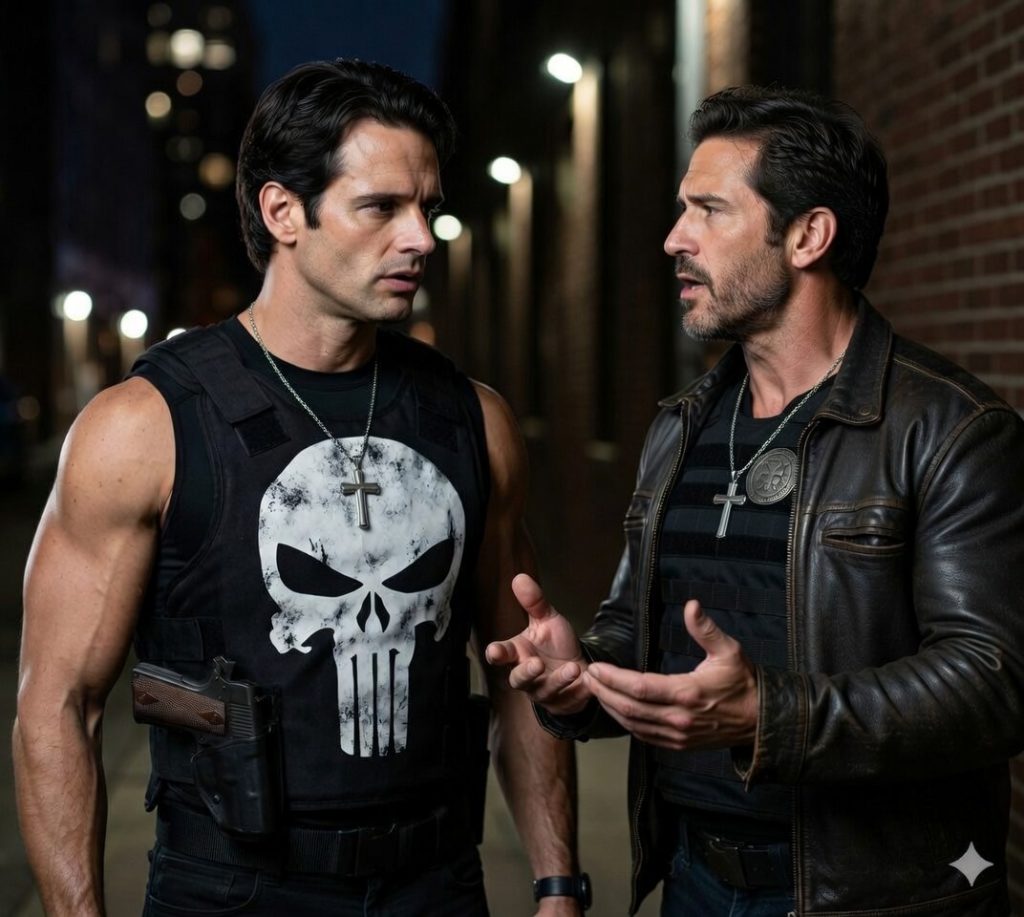
Bruno:
“Hey Joe… remember our old Italian neighbor Elva?”

Joe:
“How could I forget Elva? Always watering those tomatoes like they were her children.”

Bruno:
“Yeah… well Reginald really played her. Guy was all sweet talk at first, flowers, poetry, the whole show. Then once he moved in, boom—gone. Took the Mustang, the cash, everything.”

Joe shook his head.

Joe:
“Yeah, that was rough. And listen, I’m not saying every guy is like that. Doesn’t matter what race or background. But some dudes—no matter who they are—really lean into that stereotype of the smooth talker who’s running a game.”

Bruno:
“Exactly. It’s the game. Elva just believed every word.”

Joe laughed a little.

Joe:
“You know who it reminds me of? Madonna. She’s what—66 now? And dating that 29-year-old guy.”

Bruno:
“Yeah, I saw that online.”

Joe:
“Same pattern sometimes. Love bombing. Constant ‘I love you, you’re amazing, you’re the most beautiful woman in the world.’”

Bruno shrugged.

Bruno:
“People fall for that, man. Not just women.”

Joe:
“True, but a lot of women really respond to words. They like what they hear. If someone keeps saying the right things, it can override the warning bells.”

Bruno laughed.

Bruno:
“So you’re saying sweet talk is the oldest trick in the book?”

Joe:
“Exactly. It’s like a repeat of that whole Guy Ritchie era with Madonna. Remember that vibe around the time of the song Love Spent? Same emotional roller coaster.”

Bruno leaned back.

Bruno:
“But here’s the weird part, Joe. You always talk about this future tech world coming—longevity, life extension, all that.”

Joe nodded.

Joe:
“Yeah, eternal life around the corner in our world. But think about it from the other side. If someone rich believes normal aging is still the path… well… marry someone older, wait it out till she dies, inherit everything.”

Bruno whistled.

Bruno:
“Instant billionaire plan?”

Joe:
“Exactly. Do basically nothing, wait for time to do the work.”

Just then their friend walked up the path.

Nelly Furtado:
“You two sound like philosophers tonight.”

Joe grinned.

Joe:
“We’re talking about love bombing.”

Nelly laughed knowingly.

Nelly:
“Oh please. I’ve seen that trick too. Constant compliments, constant ‘I love you.’ After a while it’s like background music—you start believing it.”

Bruno:
“So even you got played by that once?”

Nelly shrugged.

Nelly:
“Let’s just say… anyone can fall for good words if they come at the right moment.”

Joe smiled.

Joe:
“See Bruno? Elva, Madonna, rock stars, regular people… same human story.”

Bruno nodded.

Bruno:
“Yeah. The lesson isn’t about who’s doing it. It’s about recognizing the game before you’re the one watering tomatoes alone again.”

Winning the Crowd: A.I.

Joe Bosko leaned against a stack of red clay bricks, wiping mortar from his hands.

“Artificial intelligence,” he said, squinting at the skyline. “We lay Roman arches, not code.”

Ivan Bosko laughed. “That’s exactly why we use it. The Romans used the best tools of their time. We use ours.”

Ante Bosko, who everyone swore looked like Orlando Bloom’s Croatian twin, scrolled through a tablet. “Look at this. AI can design virtual renderings of our brickwork before we even touch a trowel. Clients can see the arch, the courtyard, the oven — all in 3D.”

Joe frowned. “We don’t want to look like some Silicon Valley tech bros.”

“We won’t,” Ivan said. “We stay humble. Roman values. Strength. Durability. But we show the crowd we’re not stuck in 1920.”

Ante nodded. “Think about it. AI helps us:

  • Generate architectural previews of Roman arches and vaults
  • Calculate material costs instantly
  • Optimize brick patterns for strength and insulation
  • Create short videos explaining why Roman engineering still stands after 2,000 years

We don’t replace craftsmanship. We amplify it.”

Joe crossed his arms. “And how does that win the crowd?”

Ivan grinned. “Transparency. We show the process. Post time-lapse videos. Use AI voiceovers explaining the geometry of a true Roman arch. Teach people something. When you educate the crowd, you earn their respect.”

Ante added, “We also use AI to answer customer questions instantly on our website. Someone in Vancouver wants a brick pizza oven? The AI walks them through options at midnight.”

Joe smirked. “So we’re humble bricklayers… with a digital apprentice that never sleeps.”

“Exactly,” Ivan said. “Rome conquered with roads and aqueducts. We conquer with arches and algorithms.”

Joe picked up a brick and turned it in his hand. “Alright. But the message stays simple.”

Ante looked up. “Which is?”

Joe smiled. “Strong foundations. Honest work. Old-world skill — powered by new-world tools.”

Ivan extended his hand. “Bosko Roman Brick. Tradition meets intelligence.”

The three brothers clasped hands over the stack of bricks, mortar dust rising in the afternoon light — not trying to look like tech kings, just craftsmen who understood that even in the age of artificial intelligence, stone still wins respect when it’s laid straight.

Sister Madonna

Sister Louise and Sister Nelia had been inseparable since their first day at the convent. They had met as novices, both nervous, both idealistic, both clutching their rosaries like life rafts. Over the years, they had become each other’s mirror and anchor, finding joy in shared prayers, quiet laughter in the kitchen after chores, and whispered conversations under candlelight in the chapel when everyone else was asleep.

But God, they often joked, had a sense of humor—and His humor arrived in the form of two young priests: Father Giuseppe and Father Vincent.

Father Giuseppe was Italian, with a booming laugh that seemed to rattle the stained-glass windows, and he carried the warmth of Mediterranean sun wherever he went. Father Vincent was quieter, more bookish, a man who thought deeply and spoke softly, but whose words had the power to move even the most skeptical hearts.

At first, it was innocent. Shared duties in the parish, working side by side for the poor, organizing food drives, visiting the sick. Sister Louise found herself lingering a moment longer when Giuseppe was near, her hands trembling slightly when they passed hymnals to one another. Sister Nelia felt her pulse race when Vincent read scripture aloud, as though each word was meant only for her.

It became their secret: both of them dreaming of what could never be.

One autumn night, during vespers, Nelia whispered to Louise, “I think I’ve fallen in love with him.” Louise’s eyes widened, but then softened. “Me too,” she confessed, “with Giuseppe.”

The two of them sat in silence, the candle flames flickering like tiny judges. Finally, Louise grinned and said, “At least we didn’t fall for the same priest. That would’ve been worse.”

The problem, of course, was vow and vocation. Marriage was not for them—at least not as long as they remained nuns. And Giuseppe and Vincent, bound by the same vows, lived in the same unspoken tension.

One evening, after a parish fundraiser, the four of them found themselves alone in the rectory kitchen. Giuseppe poured wine, Vincent read aloud from Saint Augustine, and the sisters listened. The air seemed charged, as though everyone knew what was unsaid.

Finally, Giuseppe broke the silence:
“I sometimes wonder,” he said, staring into his glass, “if God calls us not only to serve Him, but to serve each other in love. What if our vocations are not cages, but roads?”

Vincent looked at him sharply, then at Nelia, who was staring at her folded hands. Louise felt her heart stop.

The sisters exchanged a glance. A wild, dangerous thought bloomed between them: perhaps they were not meant to remain as they were. Perhaps their friendship had prepared them for this moment—not just to walk together as nuns, but to leap together into another kind of faith.

That night, under the bell tower, Louise and Nelia held hands and made a pact. “If we dare this,” Louise whispered, “we dare it together. No turning back.” Nelia nodded. “Best friends in convent walls, best friends beyond them too.”

The story of whether they left, whether they married Giuseppe and Vincent, whether the Church forgave or condemned them—that part is not written in stone. Some say they disappeared from the parish one spring morning, never to be seen again, building a small chapel in the countryside where they lived as husbands and wives, still preaching, still faithful, only freer.

Others say they stayed, swallowing their longing like bitter medicine, offering their secret love as sacrifice.

But in the quiet corners of the convent garden, the older nuns still whisper about Sister Louise and Sister Nelia—the two best friends who dreamed of marrying priests, and who may have proved that God’s greatest vow is love itself.