Yehuda Berg’s Redemption

The Red Thread of Return

The Red Thread of Return

Yehuda Berg sat alone in the quiet back room of the old teaching hall. The walls still smelled faintly of incense and ambition. Once, this room had been filled with students hanging on his every word. Now, the only thing that hung in the air was the weight of his own reputation—shattered, cracked, and whispered about in circles he once led.

He exhaled.
“Greedy cult leader…,” he murmured, reading the latest headline. He didn’t argue with it. He also didn’t let it define the last chapter of his story.

That evening, he returned to a habit he had abandoned years earlier: walking the city without an entourage, without robes, without titles. Just Yehuda.

At a small café, an elderly woman struggled with her grocery bags. Yehuda stepped forward without thinking.

“Let me help.”
The woman smiled. “Thank you, dear. You have kind eyes.”

Kind eyes. No one had called them that in years.

As they walked, she spoke about her late husband, her loneliness, her hope that goodness still existed in the world. She had no idea who Yehuda was. She didn’t care. She only cared that someone helped her.

And something in Yehuda cracked open.


The First Step: Public Atonement

The next week, Yehuda held a livestream—not as a teacher, but as a man.
“I’m not here to defend myself,” he said. “I’m here to listen—to those I hurt, disappointed, or misled. I want to make amends where I can.”

He spent hours taking calls.
He apologized without excuses.
He offered restitution without conditions.
He vowed to never again be an authority over vulnerable people.

It was messy, raw, human—and real.


The Second Step: Giving Back Without Taking

Yehuda sold much of what he owned.
He started a nonprofit—not a spiritual center, not a guru-led institution—just a simple, transparent charity providing free counseling and crisis resources.

He didn’t teach.
He didn’t lead.
He served.

He swept floors.
He stocked food pantries.
He sat with addicts, runaways, single parents, the grieving and the forgotten.

Some recognized him. Most didn’t.
But those who did were shocked to see him do the simple work no one can fake.


The Final Step: Quiet Redemption

One night a young man approached him outside the shelter.

“Are you… that Berg guy? The Kabbalah teacher?”

Yehuda nodded cautiously.

“My mother used to follow you. I hated you for that.”
A tense pause.
“But I saw what you did in there tonight. You stayed late to talk to the guy no one else wanted to deal with. Respect.”

The young man walked off, leaving Yehuda stunned.

It wasn’t public approval.
It wasn’t fame.
It wasn’t a comeback.

But it was human forgiveness—the only kind that matters.


Epilogue

Years later, Yehuda would sometimes pass by old bookstores and see copies of his books gathering dust. He didn’t mind. He preferred it that way.

His redemption wasn’t in restoring his image.
It was in restoring his humanity.

And for the first time in decades, the red thread on his wrist didn’t feel like protection.
It felt like a reminder:

A leader can fall.
But a human being can always rise.

What do you think of this post?
  • Awesome (0)
  • Interesting (0)
  • Useful (0)
  • Boring (0)
  • Sucks (0)

Bogus Berg

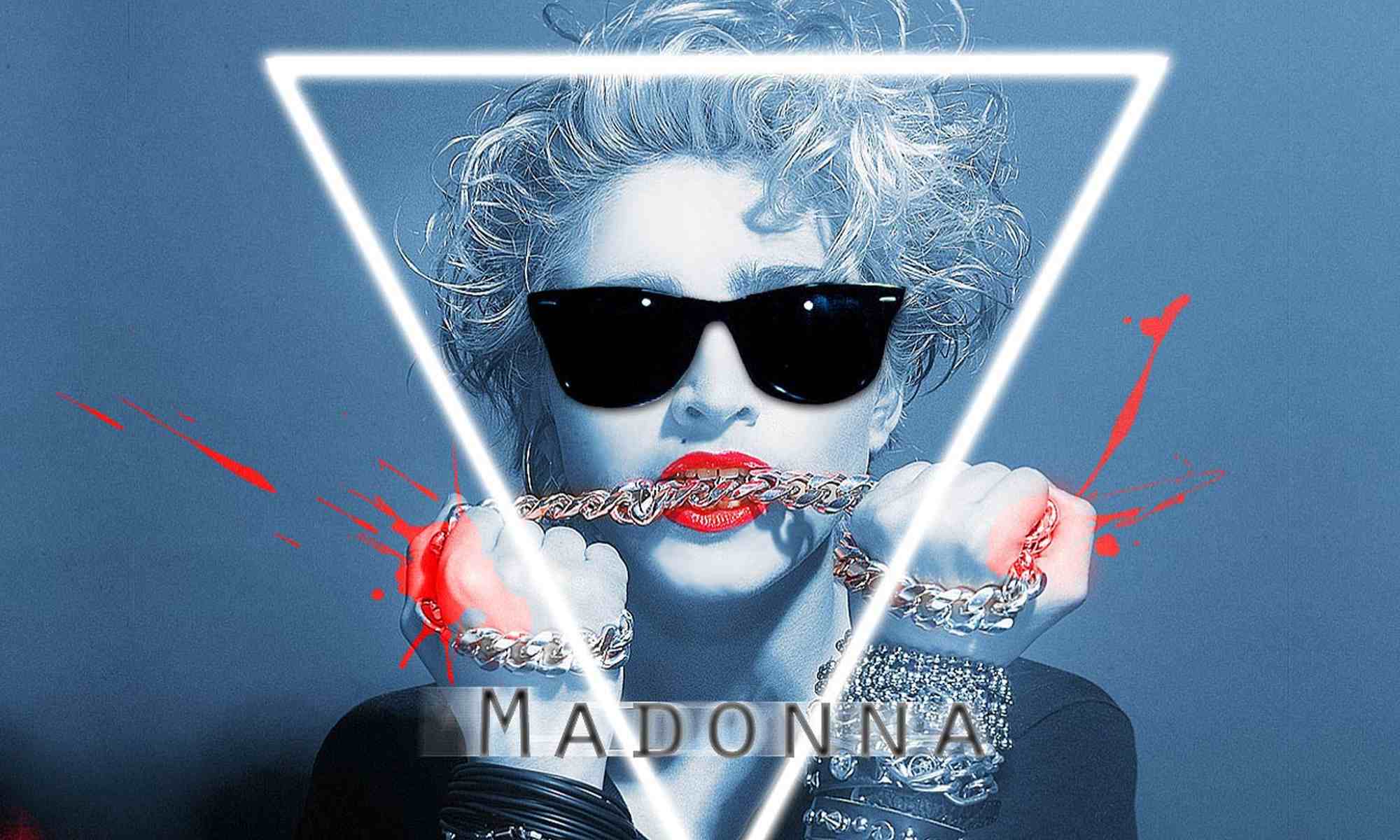
An Essay for Madonna

There comes a moment in every artist’s life when the mountain they thought was sacred reveals itself to be nothing more than a pile of cleverly arranged stones. In this story, that mountain is what I call Bogus Berg—a fictionalized version of those glossy, mystical “spiritual schools” that promise enlightenment but operate more like a luxury boutique for the soul. The thesis is simple: any organization that treats faith like a revenue stream is a dangerous cult—one that wants devotion only insofar as it can be monetized.

For years, the world has whispered about Madonna and her fascination with esoteric wisdom. But the truth—at least in this essay’s imaginative retelling—is not about devotion but disillusionment. The fictional Madonna of Bogus Berg didn’t walk away from her mystical mountain because she lost interest. She walked away because she finally saw the truth: her then-husband, Guy Ritchie, had already descended the mountain long before she did. In this narrative, Guy wasn’t the one clinging to the practice—he was the one slipping quietly out the back door, shaking his head at the absurdity, long before anyone noticed.

The Architecture of a “Money Mountain”

Bogus Berg’s model is simple:

  1. Promise cosmic secrets.
  2. Put a price tag on them.
  3. Convince the famous that fame is a cosmic signal that they were destined to join.
  4. Treat celebrity bank accounts like holy wells.

In this story, Madonna wasn’t recruited for spiritual depth—she was recruited because she was Madonna. Her presence added shine to the mountain. Her name added gravity. Her wallet added fuel.

Bogus Berg never asked what she believed; it asked what she could fund.

Guy Ritchie: The One Who Saw Through the Curtain

This narrative recasts Guy Ritchie not as the man who left Madonna behind, but as the man who left Bogus Berg first. Here, he plays the role of the truth-teller, the skeptic, the one who grumbled, “This is bollocks,” and walked away. In this fictionalized reimagining, his exit wasn’t a dramatic clash—it was a quiet shrug, the shrug of a man who grew tired of ceremonies that cost more than his film budgets.

But the mountain hated losing him.
Bogus Berg didn’t just want followers; it wanted power couples. It wanted the image of mystical glamour. Guy’s departure cracked the facade, and when Madonna later stepped away too, the mountain lost its brightest torch.

Madonna’s Awakening

The fictional Madonna of this essay stands atop the rubble of Bogus Berg and realizes something profound:
Spirituality that demands transaction is not spirituality—it’s theatre with invoices.

She discovers that real inner growth requires:

  • No branded water
  • No celebrity-only classes
  • No cosmic lectures that look suspiciously like sales funnels
  • No emotional dependence packaged as “higher learning”

Her awakening is not a rejection of mysticism, but a rejection of manipulation posing as meaning.

The Cult of Celebrity vs. the Search for Truth

Bogus Berg didn’t prey on the weak—it preyed on the powerful. The famous are often the most vulnerable because the world already believes they have everything. A person who has everything is often the one searching hardest for the one thing money can’t buy: a sense of purpose.

But Bogus Berg, in this story, turned purpose into product.

In the end, Bogus Berg is not a real place; it is a metaphor for any structure—religious, corporate, cultural—that monetizes vulnerability. The essay warns Madonna, and anyone like her, to guard their hearts, their minds, and their bank accounts from those who promise eternity but demand exclusivity, obedience, and credit card numbers in return.

Conclusion: Leaving the Mountain Behind

“Bogus Berg” is the story of a woman who climbed a mountain believing she would find enlightenment, only to discover a gift shop at the summit. It is the story of a man, Guy Ritchie, who refused the mountain’s souvenirs and walked away first. And it is ultimately the story of liberation: choosing wisdom over glamour, truth over performance, and authentic spiritual searching over curated mystical branding.

The mountain never deserved her.
And when she walked away, it trembled—not because she lost anything, but because she finally saw it for what it was.

What do you think of this post?
  • Awesome (0)
  • Interesting (0)
  • Useful (0)
  • Boring (0)
  • Sucks (0)

Close To Me

THE CURE

THE GET UP KIDS

Rabbi Joe stood in the drizzle of East Van, his coat collar turned up, watching the rain turn Commercial Drive into a mirror of neon and nostalgia. Beside him, Tom Cruise nodded solemnly, his sunglasses reflecting the glow of the Electric Avenue sign.

“The only way to keep Madonna from danger—grave danger,” Tom said, pausing with cinematic gravity, “is for her to live here. Is there any other kind of danger?”

Joe smiled faintly. “None worth surviving,” he said. “She should build her Kabbalah Centre right here, between Little Italy and the Drive. Vancouver—this is the new Jerusalem of the West.”

He adjusted his hat, his Croatian Intelligence badge glinting beneath the streetlight. “Sapere Aude,” Joe said, his voice rising with conviction. “Think for yourself. Dare to think. We need free-range cult members, not the factory-farmed kind. Let’s get the A-list to Z-list stars to move here, all of them—Greta, Kanye, Bono, even Shia if he’s up for repentance.”

Tom chuckled, imagining a Hollywood commune in East Van, actors and mystics riding the 99 B-Line to the green-screen studios.

“Safety in numbers,” Joe continued. “A city of stars with a conscience. If they ride transit, live local, and think global, maybe—just maybe—we can stop Revelation 16. No more sun scorch. No more global warming.”

From the mural-covered wall behind them, a young voice spoke. Greta Thunberg stepped forward, her eyes alight with recognition.

“Yes,” she said, almost whispering. “Big Oil. Global warming—it’s all in the Apocalypse. The Bible warned us.”

The three stood silent as the rain fell harder, washing the neon reflections into ripples. Somewhere nearby, a jazz saxophone played under an awning, and a sense of prophecy hung over Commercial Drive.

Electric Avenue had become sacred ground.

What do you think of this post?
  • Awesome (0)
  • Interesting (0)
  • Useful (0)
  • Boring (0)
  • Sucks (0)