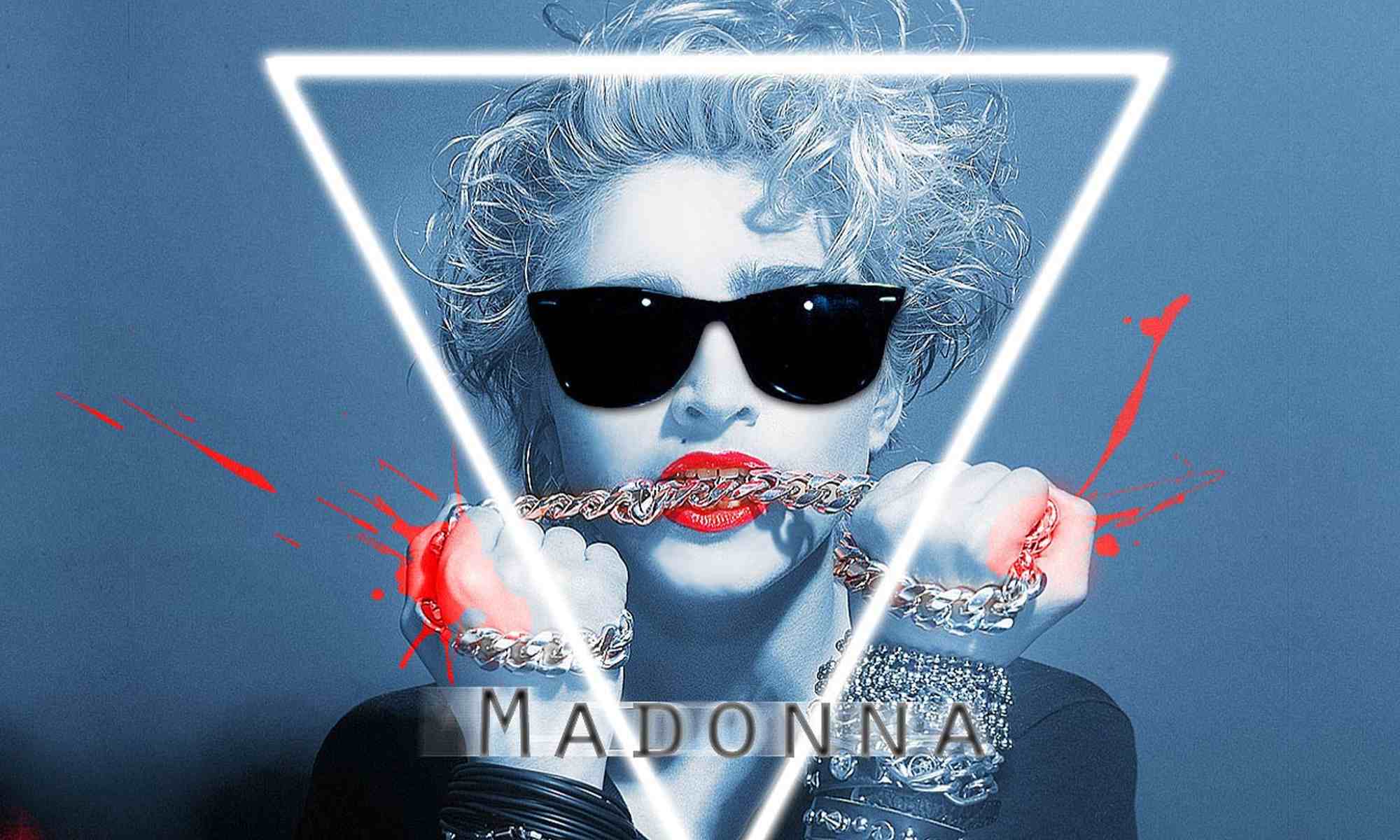
Young Pope: Like a Prayer

The Young Pope stands beneath the gilded ceiling of St. Peter’s Basilica, the candles trembling in the vast hush of the cathedral. His voice, soft but resonant, carries through the silence like incense.

“Madonna,” he begins, gazing upward toward the painted saints and seraphim, “you took your name from the Mother of God — the woman who bore both the weight of Heaven and the cries of Earth. You sang of being like a virgin, and yet the world made you its idol. You gave them what they wanted — the mirror of their own rebellion — and for that, they crowned you Queen of Pop.”

He pauses, his eyes closing in something between prayer and pain.

“But even queens must kneel before grace. The Church is not a museum of saints — it is a hospital for sinners. We are all prodigal children, wandering through the desert of fame, hunger, and doubt. And still, the Father waits at the gate.”

Then, almost tenderly, he says:

“Come back, Madonna. Come home. The world may have adored you, but Christ never stopped loving you. We are all sinners — and that is precisely why salvation was made for us.”

Madonna stands in the dim light of the basilica, dressed not in her usual glittering armor of fame, but in a simple black coat. The echo of her heels fades as she steps closer to the altar. For a moment, she says nothing — only looks at the Young Pope, her expression a blend of defiance and longing.

“Your Holiness,” she begins softly, “you talk about sinners like you’ve met them. But I am one. I’ve been burned at the stake by the Church more times than I can count — for showing desire, for asking questions, for being human.

The Young Pope doesn’t flinch. “And yet you kept the name Madonna. You never truly left her.”

A faint smile touches her lips. “Maybe I never could. The world gave me fame, but fame isn’t faith. You stand in marble halls; I stood on stage before millions. But in both places, people were looking for something holy — something that made them feel alive.”

She looks up at the crucifix. “You say Christ never stopped loving me. Maybe I’m ready to believe that again. Maybe… it’s time to come home.”

The Young Pope steps down from the altar, his eyes glistening with tears.
“Then let the angels rejoice,” he whispers. “For even in the house of glitter, grace has found its way back.”

What do you think of this post?
  • Awesome (0)
  • Interesting (0)
  • Useful (0)
  • Boring (0)
  • Sucks (0)

Malawi Hospital Interview

Interview Transcript: “Healing the Nations” — Dr. Luka Kovač & Nurse Erica Carmen with Madonna

Setting: The open veranda of the Mercy James Centre for Pediatric Surgery and Intensive Care in Blantyre, Malawi. The sound of distant children laughing, nurses chatting in Chichewa, and a soft breeze off Lake Malawi fills the air.

Dr. Luka Kovač:
Madonna, thank you for inviting us here. When I first came to Malawi, I came as a doctor, not a prophet. But since joining your foundation’s work, I’ve seen signs — real and symbolic. When I wrote about Revelation 13, I needed something to anchor the vision of the “beast of the earth.” And somehow, you found me the Malawi lion and the leopard — two creatures that remind me that power and beauty can coexist in balance.

Madonna:
I remember that. You were so moved when we visited the Liwonde National Park. The lion and the leopard are both survivors — like this country. That’s what my hospital is about: resilience. Healing the broken, protecting the vulnerable, and proving that Africa doesn’t need pity — it needs partnership.

Nurse Erica Carmen:
It’s holistic care in every sense — body, mind, and community. What inspired you, Madonna, to build a hospital instead of another school or orphanage?

Madonna:
Because I realized that a healthy child can learn, can dream, can build a future. But a sick child has no chance. When my daughter Mercy was born here, I promised myself I’d do something that went beyond charity. This hospital is about dignity. It’s about giving Malawian doctors like Luka the tools to heal their own people.

Dr. Kovač:
And you’ve done it. When I look at Lake Malawi, I see not just a lake but a lifeline. It could feed the entire region if we manage it wisely. Imagine irrigation systems drawing from it — sustainable farming, vitamin-rich crops, real food, not imports. If the nation’s health starts with the soil, this hospital is the soul.

Nurse Erica:
You’ve often said, Madonna, that “love is the new material.” Do you see that reflected here — in the work, the medicine, the children?

Madonna:
Absolutely. Love is renewable energy. You can’t exhaust it. It powers every nurse who stays past their shift, every mother who carries her child for miles to reach us. You feel it in every successful surgery. It’s medicine you don’t need a prescription for.

Dr. Kovač:
And when I look at the lion and leopard now, I see symbols of healing. The lion — courage. The leopard — adaptability. Together they guard this land. Perhaps they even guard us from despair.

Madonna:
That’s beautiful, Luka. Maybe that’s what Revelation 13 was always trying to show us — not a prophecy of doom, but a warning to evolve. To use power, not abuse it. To heal, not to harm.

Nurse Erica:
Then the beast becomes the healer — the system transformed.

Madonna:
Exactly. And Malawi becomes not just a nation recovering from poverty, but a model of how compassion can rebuild the world.

Dr. Kovač:
Then let this be our prayer: That the waters of Lake Malawi will feed, the lions will guard, and the children will rise — healthy, wise, and fearless.

Madonna:
Amen to that.

What do you think of this post?
  • Awesome (0)
  • Interesting (0)
  • Useful (0)
  • Boring (0)
  • Sucks (0)

Hemp Plastic Kabbalah Water

Rabbi Joseph sat across from Madonna, his hands folded over a worn prayer book.

“Do you know why the Kabbalah water never healed anyone the way it was promised?” he asked softly.

Madonna tilted her head, curious but cautious. “Because people didn’t believe enough? Or because the blessing wasn’t strong enough?”

Rabbi Joseph shook his head. “No. Faith alone cannot overcome poison. The problem is not the blessing, it is the vessel. Rockefeller’s crude oil empire gave the world plastic, and now that same plastic has broken down into invisible shards. Microplastics seep into every bottle, every stream. They are toxic—tiny curses hiding in the water.”

Madonna’s brow furrowed. “So it was never holy water at all?”

“The water itself was pure,” Rabbi Joseph said, “but the container corrupted it. A blessing cannot undo the rot of oil.”

She leaned closer. “So what do we do? Just stop drinking?”

He smiled faintly. “No, we change the vessel. Hemp plastic. Strong, natural, biodegradable. It does not poison, it returns to the earth. If I bless hemp water vessels online—through livestream prayer—millions can drink without fear. A digital blessing for a material world.”

Madonna nodded slowly, absorbing the mix of mysticism and practicality. “So Kabbalah 2.0?” she asked.

Rabbi Joseph chuckled. “Not new Kabbalah. Just the old truth—don’t put holy things in unholy containers.”

What do you think of this post?
  • Sucks (1)
  • Awesome (0)
  • Interesting (0)
  • Useful (0)
  • Boring (0)